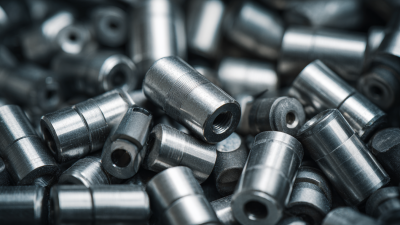
Picking the right Semiconductor Ceramic Parts manufacturer? Yeah, it’s almost never just about comparing price tags. Performance comes down to things like purity, dimensional control, thermal stability, surface finish, and whether deliveries actually show up on time, again and again. And a tiny crack around a ceramic insulator? That can shut down an entire wafer-processing line. So, yeah, this is a risk worth taking seriously.
Dr. Charles A. Harper, a well-respected electronic-packaging specialist, put it pretty simply: “Material selection is the foundation of package reliability.” That still holds up. Semiconductor ceramics have to survive plasma exposure, thermal cycling, chemical cleaning, and plenty of repeated handling. The strongest suppliers tend to blend deep materials know-how with disciplined production systems. They also give you traceability, inspection data, and engineering support that’s actually useful.
In this guide, we look at ten leading manufacturers: CoorsTek, Kyocera, CeramTec, NGK Insulators, Morgan Advanced Materials, TOTO, Maruwa, NTK Technical Ceramics, SINTX Technologies, and 3M. Each one brings something different to the table. Some are big on alumina and aluminum nitride components. Others specialize in quartz alternatives, ceramic packages, heaters, susceptors, or custom wafer-processing parts. And their capabilities can shift depending on the region and application.
No ranking is perfect. Worth admitting, right? A supplier with great lab data might still struggle when you need urgent production volumes. Another might have attractive pricing but limited customization. So buyers should compare material grades, tolerances, cleanroom controls, testing methods, lead times, and how responsive they are after the sale. The best choice isn’t always the biggest name. It’s the manufacturer that consistently matches technical requirements with real production conditions. This overview is meant as a practical starting point—just make sure engineers verify specs directly before locking in a final decision.
Semiconductor ceramic parts are precision components used inside wafer-processing equipment. They may appear as insulators, wafer holders, focus rings, showerheads, susceptors, or protective chambers. Common materials include alumina, aluminum nitride, quartz, and silicon carbide. Each material behaves differently under heat, plasma, chemicals, and mechanical stress.
These parts matter because tiny defects can affect an entire production process. A rough surface may trap particles. Uneven thermal conductivity can create wafer temperature differences. Poor dimensional control may cause alignment problems. In equipment audits, engineers should examine purity, density, thermal expansion, surface finish, and inspection records. Material strength alone is not enough. A ceramic part can be strong but still unsuitable for aggressive plasma exposure. That distinction is easy to miss.
Tips: Ask manufacturers for material certificates, dimensional reports, and test conditions. Confirm whether data applies to the exact ceramic grade and geometry. Check cleaning methods, packaging, and replacement lead times. Small details matter.
Choosing among the ten best semiconductor ceramic parts manufacturers requires more than comparing prices. Reliable suppliers should demonstrate process control, traceability, and experience with demanding thermal cycles. They should also explain failure limits honestly. No ceramic is perfect. Some designs may still crack after repeated heating and cooling. A careful supplier discusses that risk instead of hiding it. In my view, the strongest evaluation combines laboratory data, application testing, and feedback from equipment technicians. Supplier rankings can guide research, but real performance deserves the final judgment.
Evaluating semiconductor ceramic parts manufacturers requires more than comparing quoted prices. Examine their material control, process capability, and evidence of consistent production. Ask for purity data, density results, dielectric performance, thermal conductivity, and coefficient of thermal expansion. These values should match your equipment’s operating conditions, not merely a standard datasheet.
Request sample parts before approving a supplier. Inspect edge chipping, bore dimensions, flatness, surface roughness, and metallization quality under suitable measurement equipment. A ceramic susceptor may look flawless but fail after repeated thermal cycling. Ask how the manufacturer controls sintering temperature, machining tolerances, cleaning, and packaging. Detailed inspection records matter. So does traceability.
A reliable manufacturer should explain corrective actions clearly when a batch misses specifications. Review calibration certificates, quality-system records, and process-change notifications. An on-site or virtual audit can reveal whether inspection is performed routinely or only prepared for visitors. I once treated a low defect rate as proof of quality; that was too simple. Sampling methods can hide problems. Compare multiple production lots and test parts in realistic chamber conditions. Communication speed also deserves attention, especially when drawings change. No supplier is perfect. The better question is whether its weaknesses are visible, measured, and actively corrected.
The table below provides an anonymous, evidence-based evaluation framework. The benchmarks are general semiconductor ceramic industry reference points and are not rankings or claims about any specific company.
| No. | Evaluation Dimension | What to Verify | Practical Benchmark | Recommended Evidence | Suggested Weight |
|---|---|---|---|---|---|
| 1 | Semiconductor-Grade Material Capability | Ability to process alumina, aluminum nitride, silicon nitride, quartz, or other application-specific ceramics. | Material selection should match electrical, thermal, plasma, vacuum, and chemical requirements. | Material certificates, purity data, technical datasheets, and application references. | 15% |
| 2 | Dimensional Precision | Grinding, lapping, drilling, metallization, and inspection capability for tight-tolerance parts. | Typical precision ceramic components may require dimensional tolerances from approximately ±0.01 mm to ±0.10 mm, depending on geometry and process. | Inspection reports, CMM capability, gauge records, and sample-part measurements. | 12% |
| 3 | Thermal Performance | Thermal conductivity, coefficient of thermal expansion, thermal shock resistance, and operating-temperature capability. | Alumina commonly provides about 20–30 W/m·K thermal conductivity; aluminum nitride commonly provides about 140–200 W/m·K, depending on grade and test method. | Thermal-property reports, test methods, lot data, and design calculations. | 13% |
| 4 | Electrical Insulation and Dielectric Control | Dielectric strength, volume resistivity, dielectric loss, insulation resistance, and high-voltage reliability. | High-purity alumina typically offers high electrical resistivity and dielectric strength; final values must be confirmed by grade and test standard. | Electrical test certificates, environmental test results, and applicable ASTM or IEC methods. | 10% |
| 5 | Surface Finish and Cleanliness | Surface roughness, particles, ionic contamination, outgassing, burrs, and handling controls. | Surface roughness requirements may range from approximately Ra 0.1–0.8 µm for precision surfaces, subject to design requirements. | Particle-control procedures, cleanliness certificates, roughness measurements, and packaging specifications. | 10% |
| 6 | Metallization and Joining | Compatibility with active or passive metallization, brazing, soldering, bonding, and wire attachment. | Common joining routes include thick-film or thin-film metallization, brazing, soldering, and diffusion or glass-based bonding. | Joint-strength data, cross-sections, metallization thickness records, and thermal-cycle results. | 10% |
| 7 | Quality Management System | Process control, traceability, nonconformance management, corrective action, and change control. | ISO 9001 certification is a basic quality-system indicator; aerospace, automotive, or medical projects may require additional sector-specific systems. | Valid certificates, audit reports, control plans, PFMEA, SPC records, and lot traceability. | 12% |
| 8 | Production Scale and Capacity | Ability to support prototyping, engineering builds, pilot production, and stable volume manufacturing. | A capable supplier should provide realistic lead times, capacity commitments, tooling plans, and second-source or continuity options. | Capacity statements, production schedules, on-time-delivery history, and business-continuity plans. | 8% |
| 9 | Engineering and Design Support | Design-for-manufacturing guidance, tolerance analysis, material selection, tooling, and failure analysis. | Strong suppliers should review drawings before quotation and identify risks involving shrinkage, warpage, cracking, machining, and assembly. | Technical review records, DFM feedback, prototype reports, and root-cause-analysis examples. | 5% |
| 10 | Cost, Lead Time, and Total Supply-Chain Value | Tooling cost, piece price, minimum order quantity, lead time, logistics, yield, and warranty exposure. | Evaluate total cost of ownership rather than unit price alone; compare quotations using identical specifications and delivery terms. | Detailed quotations, sample-to-production timelines, yield data, delivery records, and warranty terms. | 5% |
| Total Suggested Evaluation Weight | 100% | ||||
Semiconductor ceramic components rely on materials that tolerate heat, plasma, chemicals, and repeated cleaning. Alumina remains widely used because it combines electrical insulation, hardness, and stable dimensions. In fabrication equipment, it can support rings, tubes, wafer carriers, and insulating parts. However, alumina may not manage extreme thermal gradients perfectly. Small cracks can appear after repeated heating and cooling.
Aluminum nitride offers high thermal conductivity with strong electrical insulation. It suits heater plates, electrostatic chuck bases, and heat-spreading components. Its performance depends heavily on purity, porosity, and surface finishing. Silicon carbide handles severe temperatures and abrasive environments well. It is often selected for susceptors, focus rings, and structural supports. Its dark, dense surface can also resist particle generation, although machining it requires careful process control.
Quartz provides excellent chemical resistance and optical transparency, making it useful around plasma and thermal processing zones. Sapphire offers high hardness and reliable insulation, but its brittleness demands controlled handling. Yttria-based ceramics can resist aggressive fluorine-containing plasma better than many conventional materials. Yet, coating quality and grain structure still influence service life. Material selection is not purely a catalog decision. Engineers must examine thermal expansion, dielectric behavior, gas purity, cleaning cycles, and the component’s actual contact surfaces. Test data can help, but production experience sometimes reveals an uncomfortable gap between laboratory results and chamber performance.
The semiconductor ceramic parts sector is expanding with advanced node development, plasma-intensive processing, and higher wafer throughput. Grand View Research estimates the global advanced ceramics market will grow at about 5% annually through 2030. That growth increases demand for alumina, aluminum nitride, silicon carbide, and quartz components with stable thermal performance. Manufacturers should show real experience with chamber rings, susceptors, electrostatic chucks, and insulating fixtures.
SEMI’s World Fab Forecast projected global semiconductor manufacturing equipment spending at approximately 95 billion dollars in 2024. This investment creates pressure for tighter tolerances and shorter replacement cycles. When comparing ten leading manufacturers, buyers should examine material purity, machining accuracy, coating uniformity, and lot-level traceability. ISO-certified quality systems help, but certificates alone cannot prove process control. Ask for inspection records, particle data, and failure-analysis examples.
A reliable supplier should also explain its sintering, grinding, polishing, cleaning, and packaging methods. Strong technical teams can adapt designs for thermal shock, corrosive gases, and repeated plasma exposure. Regional service capacity deserves attention, especially when downtime affects expensive tools. No ranking is perfect; price and delivery speed can hide maintenance risks. I would compare sample performance over several production cycles, not one impressive test report. That extra discipline may reveal warpage, contamination, or coating wear before full-scale adoption.
Semiconductor ceramic parts support nearly every stage of wafer manufacturing. Common categories include alumina wafer carriers, quartz process tubes, aluminum nitride heaters, silicon nitride boats, and ceramic focus rings. Each part faces different temperatures, chemicals, and mechanical stresses.
During wafer handling, carriers and boats protect polished surfaces from scratches and contamination. In deposition equipment, susceptors and heater plates provide stable thermal control across the wafer. Plasma etching uses chamber liners, edge rings, and showerhead components to resist ion bombardment and corrosive gases. Ceramic electrostatic chucks hold wafers firmly during etching, inspection, and thin-film processing. Small dimensional errors can still affect uniformity.
Material selection requires more than hardness. Alumina offers electrical insulation and chemical stability. Aluminum nitride transfers heat efficiently. Quartz performs well in high-temperature environments with controlled chemical exposure. Silicon nitride can provide strong mechanical performance under repeated thermal cycling. However, no material fits every chamber design. That assumption causes trouble.
Reliable manufacturing depends on controlled sintering, precision grinding, surface inspection, and particle testing. Engineers often review flatness, porosity, dielectric strength, and thermal expansion before qualification. Traceable inspection records help connect a defect to its processing history. In practice, longer service life may come from better cleaning compatibility, not simply higher material purity. Some specifications also deserve reconsideration after production data reveals unexpected wear patterns.
A strong top-ten shortlist should begin with evidence, not publicity. Supplier audits often reveal differences between polished samples and stable production. SEMI’s 2024 World Fab Forecast projected global fab equipment spending above $100 billion, increasing pressure on component reliability. Ceramic suppliers must therefore show repeatable control, not only impressive prototypes.
Quality starts with measurable standards. Look for ISO 9001 systems, documented material traceability, calibrated inspection equipment, and controlled cleanroom processes. Critical checks include dimensional tolerance, surface roughness, flatness, porosity, dielectric strength, and particle levels.
Statistical process control and Cpk data are more useful than broad claims. Aerospace or medical projects may also require sector-specific quality systems. Ask for recent lot records.
Customization separates capable manufacturers from catalog sellers.
Confirm whether they can adjust alumina, aluminum nitride, zirconia, or silicon carbide grades for thermal, electrical, or chemical needs. Review CAD feedback, tooling ownership, prototype speed, and engineering-change controls. Production capability matters equally: furnace capacity, machining accuracy, metallization options, inspection throughput, and backup equipment should be transparent.
A 2024 industry analysis by Grand View Research identified advanced ceramics as a growing market, driven by electronics and high-temperature applications. Growth can hide weaknesses.
Ten suppliers may look similar on paper. They are not. Request sample testing, audit access, and failure-analysis reports before approval.
My own evaluation would still leave room for doubt; supplier data can be incomplete, and real performance may change after scale-up.
Choosing among the 10 best semiconductor ceramic parts manufacturers requires more than comparing prices. The right supplier must match your process, materials, tolerances, and delivery risks. SEMI’s World Fab Forecast reported that global semiconductor fab equipment spending could reach about US$112 billion in 2025. This expansion increases demand for stable, contamination-controlled ceramic components. However, market growth does not prove manufacturing quality.
Ask how the manufacturer controls alumina, aluminum nitride, or silicon carbide from powder preparation to final inspection. Check dimensional tolerances, surface roughness, thermal-shock testing, and metal contamination results. A reliable supplier should provide lot-level traceability, certificates of analysis, and clear corrective-action records. Look for statistical process control, not only a polished sample. Request process capability data for critical dimensions. A beautiful prototype can hide weak production control.
Tips: Send a drawing with tolerances, operating temperature, plasma exposure, and cleaning requirements. Ask for sample data from three separate lots. Confirm cleanroom classification and packaging methods. Review delivery performance over the past year. WSTS estimated the semiconductor market at approximately US$627 billion in 2024, showing the scale of the industry, but ceramic quality remains application-specific. I would also inspect failure records, even when they feel uncomfortable. Few suppliers publish them openly. That silence deserves a question. Consider total cost, including coating, inspection, replacement time, and tool downtime. Short lead times are useful. Repeatable performance matters more.
Thermal conductivity is a key benchmark when evaluating ceramic parts for semiconductor equipment. Aluminum nitride and silicon carbide are suitable for high-heat applications, alumina offers a balanced cost-performance option, while quartz is commonly selected where low thermal conductivity and high purity are required. Actual values vary by grade, density, purity, and manufacturing process.
Semiconductor manufacturing is entering a period of sustained investment in wafer-fabrication capacity, increasing demand for dimensionally stable, contamination-controlled components. SEMI’s recent semiconductor manufacturing equipment forecast projects industry spending to exceed $100 billion annually, supported by advanced logic, memory, power, and compound-semiconductor applications. In parallel, the *Technical Ceramics Market* report from MarketsandMarkets indicates that technical ceramics are expected to expand at an annual rate of approximately 7% through 2028, driven by their resistance to heat, wear, corrosion, and electrical breakdown. These trends are reinforcing the use of high-purity alumina in semiconductor and industrial equipment.
Custom alumina ceramic parts made from 99.8% high-purity Al₂O₃ can be produced from customer drawings for demanding assemblies. Precision grinding machines and CNC machining centers support tight tolerances, intricate profiles, and repeatable production of complex geometries. Typical components include electrical insulators, bearing balls, seal rings, bushings, custom fixtures, and other wear-resistant parts used in vacuum, thermal-processing, chemical-handling, and automation systems. Alumina’s low particle generation, strong dielectric performance, and resistance to aggressive chemicals make it suitable for applications where metallic parts may introduce contamination, degrade rapidly, or lose dimensional stability under elevated temperatures.
They are precision components used inside wafer-processing equipment. Examples include wafer holders, focus rings, showerheads, susceptors, and protective chambers.
A rough surface can trap particles. Uneven thermal conductivity may create wafer temperature differences. Minor defects can disrupt an entire production process.
Common materials include alumina, aluminum nitride, quartz, silicon carbide, sapphire, and yttria-based ceramics. Each behaves differently under heat, plasma, chemicals, and stress.
Check purity, density, thermal expansion, surface finish, and dimensional accuracy. Review inspection records and actual test conditions. Strength alone is not enough.
Request material certificates, dimensional reports, calibration records, and test conditions. Also confirm cleaning methods, packaging standards, traceability, and replacement lead times.
Samples reveal edge chipping, bore errors, flatness problems, roughness, and metallization defects. A part may look flawless but fail after repeated heating and cooling.
Alumina offers electrical insulation, hardness, and stable dimensions. It suits rings, tubes, wafer carriers, and insulating parts. Extreme thermal gradients may still cause cracks.
Aluminum nitride provides high thermal conductivity and strong electrical insulation. It can suit heater plates and heat-spreading components. Purity, porosity, and finishing strongly affect performance.
Silicon carbide tolerates severe temperatures and abrasive environments. It suits susceptors, focus rings, and structural supports. Machining requires careful control.
No. Laboratory results may not reflect production chamber conditions. Compare several lots and test parts under realistic thermal, chemical, and cleaning cycles. I once trusted a low defect rate too quickly. Sampling can hide problems.
Semiconductor Ceramic Parts are essential components used in semiconductor manufacturing equipment because they provide excellent thermal stability, electrical insulation, chemical resistance, and dimensional precision. This article explains what these parts are, why they matter, and how to assess manufacturers based on material expertise, engineering capabilities, process control, production capacity, delivery reliability, and technical support. It also reviews key ceramic materials, such as alumina, aluminum nitride, silicon carbide, and zirconia, highlighting how their properties suit different operating environments.
The article presents ten leading manufacturer types to consider without focusing on any specific brand, while exploring product categories and applications across wafer processing, plasma systems, thermal modules, and precision handling equipment. It also discusses quality certifications, inspection procedures, customization options, prototyping, and scalable production. By comparing technical performance, consistency, cost, lead times, and communication, readers can select a manufacturer that best matches their equipment requirements and long-term semiconductor production goals.