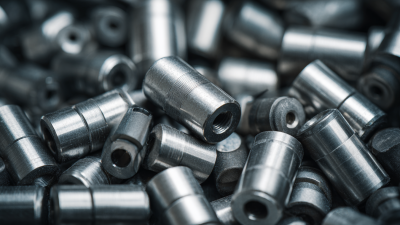
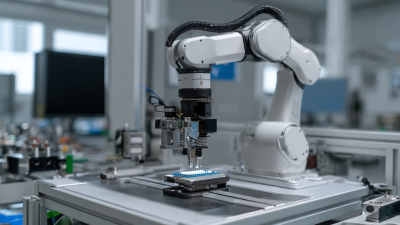
In the world of automation, the choice of tools significantly impacts efficiency and precision. Ceramic End Effectors stand out as a robust option. Dr. Emily Harrison, a leading expert in automation technology at Innovative Robotics, emphasizes, "Ceramic End Effectors provide unparalleled durability and precision for varied applications." This highlights their unique properties in a competitive market.
Ceramic materials are inherently resistant to wear and high temperatures. This makes Ceramic End Effectors reliable for demanding tasks. They excel in environments with stringent hygiene requirements, such as food processing and pharmaceuticals. However, they can be more brittle compared to their metal counterparts. Careful handling is essential to avoid potential breakage during operation.
Adopting Ceramic End Effectors can optimize your automation systems. They might have a higher upfront cost, but their long-term benefits often justify the investment. As automation technology evolves, reflecting on your choices is crucial. Are Ceramic End Effectors the best fit for your specific needs? The answer could redefine your operational efficiency.

Benefits of Ceramic End Effectors in Automated Systems
Ceramic end effectors are gaining attention in automation. They offer numerous benefits in various industrial applications. One primary advantage is their exceptional wear resistance. This quality enhances longevity, reducing downtime due to replacements. Additionally, they are lightweight. This feature can optimize robotic performance, allowing for quicker, more efficient operations.
Another significant benefit is their chemical resistance. In environments exposed to harsh substances, ceramic materials perform exceptionally well. This durability ensures that end effectors maintain functionality even in challenging conditions. Furthermore, ceramic end effectors are non-marring, which is crucial for tasks that involve delicate components. They protect surfaces and boost overall product quality.
However, users must consider the limitations. Ceramic is inherently brittle. This characteristic means it can crack under extreme pressure. Ensuring proper handling and application is essential. Continuous learning about the material and its capabilities is vital. As automation evolves, the insights gained from ceramic end effectors can lead to better design and functionality. Embracing these challenges is part of innovation.
Comparison of Ceramic vs. Traditional End Effectors
When looking at the comparison between ceramic and traditional end effectors, ceramic materials stand out. They have unique properties that make them suitable for various automation tasks. Ceramic end effectors are more resistant to wear and tear. Their durability can significantly enhance the lifespan of automation systems. This resistance becomes vital in environments where traditional materials might fail quickly.
Traditional end effectors often rely on metals or plastics, which can wear down over time. They are also prone to corrosion and degradation. Ceramic materials, on the other hand, maintain their integrity longer. This becomes increasingly important in applications involving harsh chemicals or extreme temperatures. However, working with ceramics can be challenging. They are generally more brittle and require careful handling. This fragility may lead to unexpected breakage, urging users to reflect on their application needs.
One must consider the trade-offs when selecting end effectors. While ceramics offer advantages, they may not be suitable for every scenario. Each application should be assessed individually. Understanding the specific environment and task will help in making an informed choice.
Why Choose Ceramic End Effectors for Your Automation Needs? - Comparison of Ceramic vs. Traditional End Effectors
| Feature |
Ceramic End Effectors |
Traditional End Effectors |
| Material Durability |
High resistance to wear and chemicals |
Limited durability; prone to corrosion |
| Weight |
Lightweight design for improved speed |
Heavier; may slow down operations |
| Thermal Stability |
Excellent thermal resistance |
Limited thermal resistance |
| Surface Finish |
Smooth, non-stick surface |
Rough surface may require coatings |
| Cost |
Higher initial investment, lower long-term costs |
Lower initial cost, higher maintenance costs |
Durability and Longevity of Ceramic Materials
Ceramic materials stand out for their remarkable durability and longevity, making them ideal for automation. Unlike traditional metal or plastic end effectors, ceramics resist wear and tear over time. They can withstand harsh environments, including extreme temperatures and corrosive substances. This makes them suitable for various industrial applications, from food processing to chemical handling.
In addition, the lightweight nature of ceramics contributes to their efficiency in automated systems. They reduce the overall load on robotic arms, improving agility. However, it's important to note that while ceramic end effectors offer many advantages, they can be brittle. This fragility may lead to unexpected breakage under stress. Therefore, careful consideration of usage scenarios is essential.
The longevity of ceramic materials is evident in their life cycle. Many industries report longer operational periods without the need for replacement. Regular maintenance is still necessary, but ceramics often require less frequent servicing compared to other materials. As industries evolve, understanding the balance between performance and potential drawbacks of ceramic end effectors will remain crucial.
Applications of Ceramic End Effectors in Industry
Ceramic end effectors are gaining traction across various industries. Their unique properties contribute to enhanced performance and reliability in automation. In precision applications such as semiconductor manufacturing, ceramic components resist chemicals and extreme temperatures, allowing for extended equipment life. Industry reports indicate that the demand for these components is projected to grow by 7% annually over the next five years.
In the pharmaceutical sector, ceramic end effectors ensure sterile handling of products. They are non-reactive, which eliminates contamination risks. This feature is critical when dealing with sensitive substances. Data shows that adopting ceramic solutions can reduce downtime by up to 20%. However, the initial investment may deter some industries. Evaluating long-term savings against upfront costs is essential.
Tip: Assess your specific application requirements before transitioning to ceramic end effectors.
In the automotive industry, robotic arms with ceramic end effectors are used in assembly lines. Their lightweight nature boosts efficiency. Moreover, they withstand abrasive materials in production environments. Reports highlight that companies integrating these technologies have seen up to a 15% increase in productivity. Yet, some manufacturers remain hesitant due to concerns about durability compared to metal options. It's crucial to consider the trade-offs in material properties and application needs.
Tip: Always conduct thorough testing before full-scale implementation to ensure reliability.
Cost-Effectiveness of Ceramic End Effectors
Ceramic end effectors have gained attention for their cost-effectiveness in automation. A study by the International Federation of Robotics showed that companies can reduce operational costs by up to 30% by using ceramic materials. Their lightweight nature allows for faster movements, enhancing productivity. Additionally, ceramic end effectors offer resistance to high temperatures and wear, reducing maintenance expenses over time.
**Tip:** Consider the long-term savings when choosing materials for automation. Initial investments may seem higher, but durability can lead to lower overall costs.
Ceramics have a specific tensile strength that often surpasses metals. This strength translates to less frequent replacements and downtime. A report by the American Society for Materials showed that industries using ceramic end effectors experienced a 25% decrease in replacement part expenses. However, it’s important to note that not all applications may benefit equally. Evaluating your specific needs is crucial for decision-making.
**Tip:** Always analyze your application environment before selecting materials. Understand that certain conditions may favor traditional materials over ceramics.
Cost-Effectiveness of Ceramic End Effectors
Understanding the Manufacturing Process of Ceramic Components
Ceramic components have become increasingly popular in automation due to their unique properties. The manufacturing process of these ceramics is intricate and requires precision. First, raw materials like clay, alumina, or zirconia are sourced. These materials undergo shaping, often through pressing or molding, to create the desired form. After shaping, the pieces are dried to remove moisture.
The next step is sintering, where the ceramic shapes are heated to high temperatures. This process causes the particles to fuse, resulting in a dense and durable final product. Care must be taken during this phase. Overheating can lead to flaws, ruining the batch. Quality control measures are vital at this stage to ensure consistency.
Tip: Always check for the type of ceramic used in your components. Different ceramics have varying properties like strength and thermal resistance.
Understanding the properties of ceramics is essential for selecting suitable end effectors. They are often lighter and more resistant to wear compared to metals. However, they can be brittle and may require careful handling.
Tip: Consider the application environment. Moisture or extreme temperatures can affect the performance of ceramic components. This insight could save time and resources in your automation process.
Future Trends in Ceramic Technology for Automation
The landscape of automation is evolving rapidly. Ceramic technology is at the forefront of this shift. Its durability and versatility make it a top choice for many industries. According to recent industry reports, the market for ceramic materials in automation is projected to grow by 15% annually. This trend underscores the potential that ceramics hold in enhancing efficiency and reliability.
One of the most compelling advantages of ceramic end effectors is their corrosion resistance. Unlike traditional materials, ceramics can withstand harsh environments without degrading. This property is critical in manufacturing processes involving chemicals or extreme temperatures. Additionally, ceramics exhibit excellent thermal stability. They can operate effectively in conditions that would compromise other materials. However, companies must navigate the challenges of cost and complexity in integrating ceramic components.
As automation technology advances, we are seeing innovation in ceramic manufacturing techniques. Additive manufacturing and improved sintering processes are making ceramics more accessible. Techniques such as 3D printing offer customization options for specific applications. This area still needs more research and exploration to realize the full potential of ceramics in automation. Addressing these gaps will be essential as industries aim for greater efficiency and sustainability.
Enhancing Semiconductor Manufacturing: The Advantages of Bernoulli Ceramic End Effectors for Fragile Wafer Handling
In the realm of semiconductor manufacturing, the handling of fragile wafers presents a significant challenge. Traditional methods often result in detrimental contact that can lead to contamination and damage. To address these issues, innovative solutions like Bernoulli ceramic end effectors have emerged as a game-changer. These advanced tools utilize aerodynamic lift to manipulate wafers without any physical contact, effectively minimizing the risk of backside contamination and edge chipping, which is crucial for maintaining the integrity of thin and delicate wafers.
Constructed from high-purity materials such as alumina or silicon carbide, Bernoulli ceramic end effectors are designed with precision-machined nozzles that eject pressurized gas. This process creates a thin air film that supports the wafer, allowing for safe and secure movement even in high-speed environments. The use of ceramic substrates provides remarkable flexural strength and excellent dimensional stability, ensuring that wafers are positioned accurately during transfer operations. This non-contact handling method not only preserves the wafers but also enhances overall efficiency in semiconductor production, making it an ideal solution for manufacturers dealing with increasingly fragile materials.
FAQS
: Ceramic end effectors have exceptional wear resistance, lightweight construction, and chemical resistance. They enhance operational efficiency.
This feature increases the longevity of components, reducing downtime due to replacements and improving overall productivity.
Yes, they are non-marring, preventing damage to sensitive surfaces and ensuring high product quality during operations.
Ceramics are brittle, which means they can crack under extreme pressure, requiring careful handling during use.
Ceramic end effectors can withstand extreme temperatures and corrosive substances, maintaining functionality where other materials fail.
Cost and complexity of integrating ceramic components can be significant hurdles that need careful consideration.
It is expected to increase by 15% annually, reflecting the rising demand for durable materials in automation.
Advanced methods like additive manufacturing and 3D printing are enhancing customization for specific industrial needs.
Yes, more research is required to fully explore and address gaps in ceramic applications within automation systems.
Continuous learning about ceramic capabilities and proper application is essential for optimizing performance and innovation.
Conclusion
Ceramic End Effectors are becoming increasingly popular in automation systems due to their numerous benefits. These components offer enhanced durability and longevity, outlasting traditional materials in various industrial applications. The cost-effectiveness of Ceramic End Effectors makes them a viable alternative, providing long-term savings despite a potentially higher initial investment.
Moreover, the manufacturing process of ceramic components is evolving, leading to advancements in technology that further enhance their functionality in automated systems. As industries continue to embrace automation, understanding the capabilities and future trends of Ceramic End Effectors will be crucial for optimizing production efficiency and reliability in the years to come.